
How a Machine Ended Up in the Vertical Drama Business, Three Ways
Ask people who work in vertical drama about artificial intelligence in 2026 and you get three different answers, according to which end of the business they sit in. One group handles it as a cost line inside an existing app, used without fanfare on a share of the slate. Entire series that no camera ever touched have come from a second group, dropped directly into social timelines. A third camp chinese short dramas spends its time arguing about what the first two are doing to the craft. In a genre already engineered for speed, all three are happening at the same time. A short drama is a vertical series of 60 to 100 second episodes, usually 50 to 100 of them, and Western producers have noted budgets of roughly $150,000 to $300,000 for a shoot of eight to ten days. Any automated production pipeline gets benchmarked against that figure.
Inside the Apps: AI as a Line Item
The commercially important version of this story is also the least noticeable one. Within the largest apps, generative tools get used the way any other cost-saving tooling gets used, on part of the library rather than all of it, and rarely with a notice announcing it. The financials explain the hunger. Chinese producer Jiuzhou Culture told state media that a 70-episode series cost $100,000 to $150,000 to make. Any shortcut that removes a shooting week is worth trying against numbers like those. The upside is big enough to justify the test run, since Sensor Tower puts 2025 in-app revenue across short drama apps at about $2.8 billion to $3 billion, more than double the year before. Two current instances give the spread of what the apps are actually releasing.
DramaWave and the Eighty Percent Catalogue
DramaWave is the plainest case of a company treating generated output as the production line rather than a side dish. Published by SKYWORK AI PTE LTD, part of Kunlun Tech’s Skywork business, the app launched in September 2024. According to the outlet 36Kr, by the second three-month period of 2026, more than 80 percent of DramaWave’s newly released output was AI-generated and its annualized revenue had passed $700 million. An trade analysis, for scale, put that annualized figure at roughly $120 million in March 2025, with more than 10 million monthly users. By Media Partners Asia estimates, DramaWave accounts for about 13 percent of the microdrama market outside China. The listing claims more than 30,000 dramas in 18 languages, while Google Play shows 100 million-plus installs. Weekly passes run about $7.99 to $19.99 in the US App Store as of September 2026, with a monthly plan near $36.99, and those price points differ by country and change without much notice.
ReelShort and the Motion Comic Route
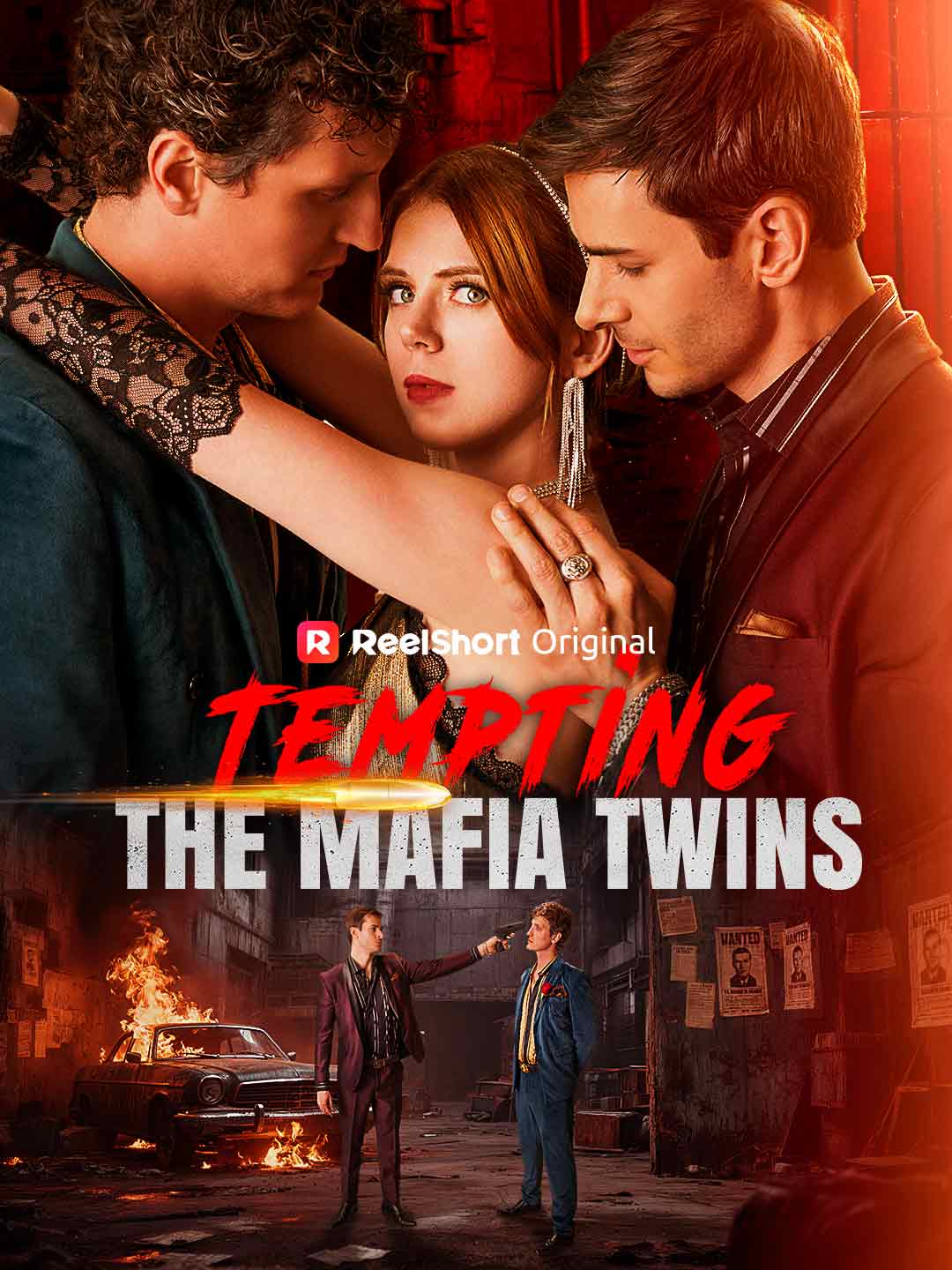
ReelShort went narrower, setting animated titles alongside its live-action catalog. Shattered Vows, a 2026 ReelShort series running 52 episodes, is billed as an AI-generated animated motion comic. Heiress Vanessa Windsor, who learns that her husband and her best friend helped her sister’s killer escape, carries the plot, and the page lists no cast at all, which is the practical tell for this kind of production. A second ReelShort show, The Lost Heir, runs 58 episodes and is also an animated motion comic rather than live action. It centres on Arthur Lancaster, who loses his memory saving his brother, grows up on a farm under the name Johnny, and eventually unmasks the foster sister who spent years framing him. Worth knowing before you search: a separate ShortMax series also called Shattered Vows is an altogether separate show with a different plot. Neither ReelShort show is a token experiment, since both run at full series length.
Outside the Apps, When the Whole Show Is Generated
The second current skipped the app stores entirely. Fruit Love Island is an AI-made vertical micro-drama that parodies the reality dating show Love Island, with anthropomorphic fruit contestants moving into a villa, coupling up and recoupling, complete with a spoof of the Casa Amor twist. The visuals, the voice-overs and the scripts were all took care of by generative tools, episodes run about two to four minutes, and Forbes likened the look to a children’s CGI-animated film. Viewers voted on contestant choices through Google Forms, a participatory hook none of the commercial apps has replicated. It did not come out of nowhere, since a wider surge of ai fruits videos had been going around since February 2026, traced by Know Your Meme to a TikTok account that uploaded a strawberry’s affair with her eggplant boss. The growth curve unsettled people in the industry, since episode one went up on March 13 or 14, 2026, and by March 22 the account had passed 3 million followers and 300 million views. TODAY noted total views of 214 million by April 6, with episodes coming in at an average of more than 10 million each. That show has its own full guide elsewhere in this series of guides, so the point worth keeping here is more limited: one anonymous account reached app-scale attention with no camera, no cast and no budget anybody can name.
Reading the Backlash Closely
Pushback came almost as fast as the views, and commentators widely called the series AI slop. The phrase is doing several tasks at once, and pulling them apart helps. The aesthetic grievance comes first, levelled at work that is low-cost to generate and painless to scroll past. The second is about credit, and comedy creator and voice actor Joy Ofodu told TODAY that the series was likely inspired by her own talking-fruit videos, which points at the inconvenient fact that generative tools can replicate a style without ever naming the person who originated it. The documented record itself is the third complaint. The creator behind the original Ai Cinema account is anonymous and unconfirmed, several online figures have professed authorship without proof, no website has been verified as the show’s official home although several present themselves that way, and imitation accounts began posting imitation episodes within a matter of weeks. Even the timeline has soft edges, since the date of the Season 2 first episode is derived from the video rather than made public by anyone. Reactions were not uniformly hostile either, because Love Island USA’s JaNa Craig and Kaylor Martin interacted with the series and remade clips with human performers, while Season 7 winner Amaya Espinal said she would never watch it.
Where AI Appears, and What Is Actually Verified
Most of the work in covering this beat is sorting the confirmed from the assumed. The table below splits the places generated content turns up from the claims pinned to them. People are still typing ai fruit love island into search boxes months after the villa closed, and that tells you how much of the discussion is fuelled by one series rather than by the apps quietly putting out generated episodes every week. Only what a named source actually established is listed in each line.
| Where AI shows up | Example | What is actually verified |
|---|---|---|
| Most of an app’s new lineup | DramaWave | 36Kr reports over 80 percent of newly released output AI-generated, with annualized revenue past $700 million by the second quarter of 2026 |
| Animated titles within a live-action catalogue | ReelShort’s Shattered Vows, 52 episodes | Described as an AI-generated animated motion comic, with no cast listed |
| Animation without a stated AI credit | ReelShort’s The Lost Heir, 58 episodes | Labelled as an animated motion comic rather than live action |
| An entire series made outside the apps | Fruit Love Island | AI used for visuals, voice-overs and scripts, with episodes of about two to four minutes |
| Authorship behind a viral AI series | The Ai Cinema account | Anonymous and unconfirmed, with several unproven claims of authorship |
| Sites claiming to be the official home | Fruit Love Island fan and search-optimized sites | None verified as official, and imitation accounts exist |
| Release dates for generated material | Fruit Love Island Season 2, episode one | Date taken from the video itself, never released by the creator |
None of this decides whether generated vertical drama is any good, and the argument will survive the fruit. What the public record does show is that the economics of the form rewarded automation before audiences asked for it, and the apps moved first. For viewers the practical advice stays unglamorous: look at the account handle before you trust an upload, take fan sites and inferred dates as tentative, and never download an unofficial app or a modified build advertising free episodes or unlimited coins. The genre spent 2026 proving it can produce attention at scale, and the open question for 2027 is whether anybody can tell the difference on a phone screen.